
The short answer
If you already batch cocktails, a keg is not a new category to evaluate. It is a better vessel for the thing you already believe in: one locked spec, made ahead, served fast. The honest comparison comes down to five factors: consistency, labor, speed, shelf life and cost. Batching wins on flexibility. Kegs win on everything that gets harder as volume grows.
Ingredients
- A batched cocktail
- A draft system
- A keg
Method
- Batched: the mix holds in a bottle or jug, gets poured and finished by hand, and drifts over a service.
- Kegged: the mix holds in a sealed keg, pours through a line you already run, and is identical from first to last.
Pro tips
- If your batch quality changes between the first pour and the last, that is the exact problem a keg solves.
- Kegging also removes the per-drink labor: no measuring, no pouring, no cleanup per serve.
- You do not need new hardware to test it. One keg on one existing beer line is the whole experiment.
The five-factor comparison
Consistency: a batch is as consistent as the person who made it that morning, and it drifts with every hour of citrus oxidation and every scoop of ice. A keg is sealed at one spec and cannot drift; pour one and pour one hundred and they are the same drink.
Labor: batching moves the work from service to prep, but the work still exists: juicing, measuring, bottling, restocking, and a finished build per glass. A keg deletes the prep shift and turns the serve into a tap pull.
Speed: a batched cocktail still takes 30 to 60 seconds per serve to pour, ice, top and garnish. A draft cocktail pours in a few seconds, which is the difference between a moving line and a stalled one at peak.
Shelf life: a citrus batch is at its best for hours. The non-alcoholic Craft Standard mix is shelf-stable until you spike it, because the spirit and the mix meet in the keg, not in a prep container.
Waste: batches that do not sell get poured away with their labor inside them. A sealed keg holds until you need it.
What the numbers look like
The draft math for a 30L keg: $155 for the keg, roughly $81 of your own spirit, about $236 all-in. That returns around 245 drinks; at $12 a drink that is roughly $2,940 of revenue and a pour cost near 8 percent. Most hand-built and batched cocktail programs run pour costs of 18 to 25 percent before labor. The keg's margin advantage is structural, not promotional.
When batching is still the right call
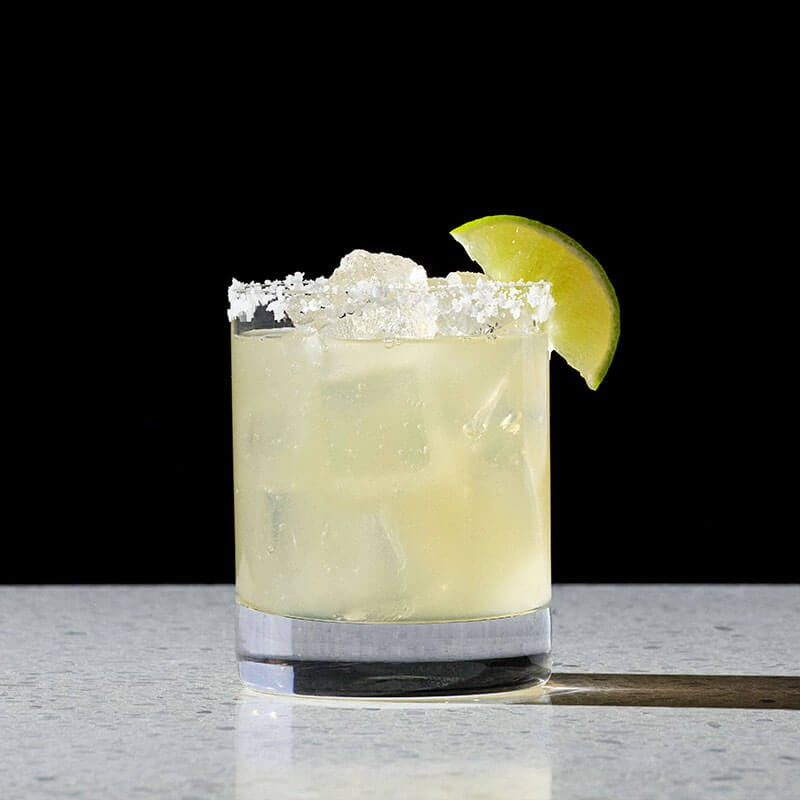
Batching earns its place for rotating menus, one-off specials, low-volume drinks and anywhere a bartender's touch is the product. If a cocktail sells ten serves a week, it does not need a tap handle. The crossover point is the drink you make constantly, identically, under time pressure: the house margarita, the signature serve, the event pour. That drink is a keg wearing a batch costume.
Moving from one to the other
The migration is smaller than it sounds. Pick the one drink that slows you down most, put it on one existing beer line with a Craft Standard keg and your own spirit, and leave the rest of the program exactly as it is. The tap either earns its handle in a month or it does not. No build-out, no new lines, no glycol, and the Spiker coupler comes free with purchase.
The batch version
Batching fixes the recipe but not the labor. Somebody still measures, pours, garnishes and cleans up every drink, and by drink 80 the quality has moved.
On tap: the easier way
Kegging fixes the labor too. The spec is sealed, the pour is a tap pull, and the yield is about 245 identical drinks from a 30L keg. Same cocktail, a fraction of the hands.
Skip the build. Put the Margarita on tap.
~245 identical serves per keg, poured at the speed of beer.
See the Margarita keg →Frequently asked
Does kegging change the taste of a cocktail?
No. The recipe is identical; the keg preserves it instead of letting it drift. The mix is sealed and pushed by gas rather than sitting open through a service.
Do I need new equipment to pour kegged cocktails?
No. Craft Standard kegs connect to a standard US Sankey D coupler on your existing beer line.
How long does a cocktail keg last?
The non-alcoholic mix is shelf-stable until you add the spirit. Once spiked and tapped, rotate it like any draft product on your line-cleaning schedule.
Is a kegged cocktail cheaper than a batched one?
Per drink, usually yes once labor is counted. The draft build runs a pour cost near 8 percent; typical cocktail programs run 18 to 25 percent before anyone is paid to shake.
Whose alcohol goes in the keg?
Yours. The keg ships non-alcoholic and shelf-stable; you add the spirit you already stock, so the brand, the proof and the margin stay yours.
What is the smallest way to try it?
One keg, one existing tap, one month. If the handle does not out-earn what it replaced, go back to batching. Venues rarely go back.