
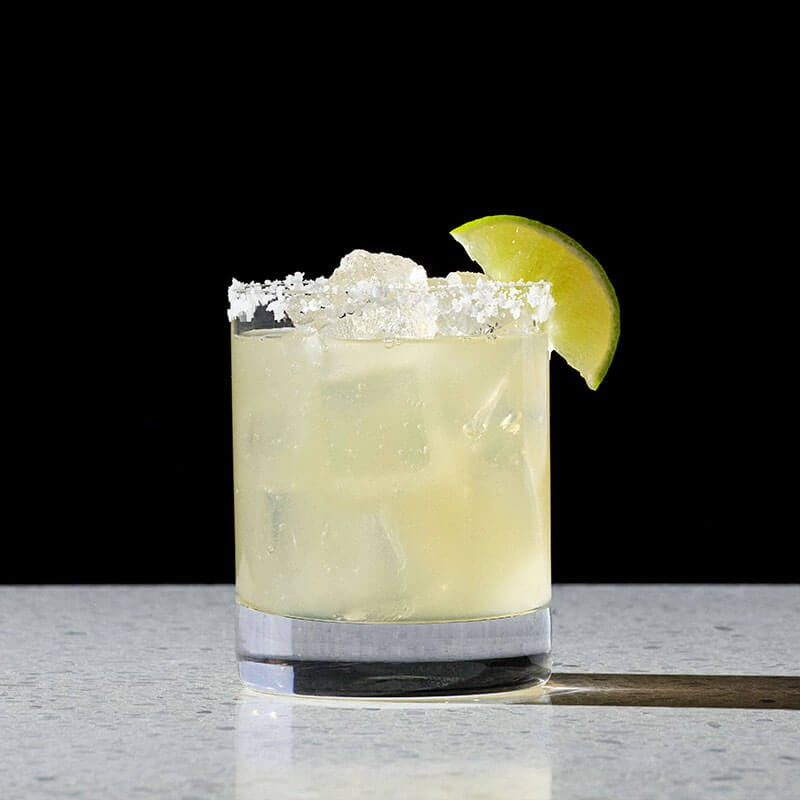
The short answer
A pitcher margarita is built for a table: easy to mix ahead, easy to top up, and sociable in a way single serves are not. The recipe below makes one generous pitcher of about six drinks. Keep it on the drier side, because it sits on ice and dilutes as the evening goes, and the last glass should still taste like a margarita.
Ingredients
- 350 ml tequila (blanco)
- 200 ml fresh lime juice
- 150 ml orange liqueur
- 120 ml agave syrup (1:1)
- Soda water to top, lime wheels to garnish
Method
- Combine tequila, lime, liqueur and agave in a pitcher and chill well, ideally an hour in the fridge.
- Add ice just before serving, top with a short splash of soda and stir gently.
- Serve over fresh ice in salted glasses with lime wheels.
Pro tips
- Chill everything before it hits the pitcher. Less ice melt means the last glass tastes like the first.
- Hold the soda until the end so the bubbles survive.
- Salt the glasses, not the pitcher. Salt in the mix turns brackish as it sits.
The dilution clock
A pitcher on ice is a drink on a timer. Ice melt adds roughly 15 to 20 percent water across an hour on the table, which is why the recipe runs drier and stronger than a single serve. If your party sips slowly, build the pitcher at full strength and serve it over a single large block instead of cubes; less surface area, slower melt.
Frozen, spicy and other versions
Frozen: blend the same ratios with about 700 g of ice until just smooth. Serve immediately; a frozen pitcher does not hold.
Spicy: steep two sliced jalapenos in the tequila for 30 minutes before mixing, then strain. Heat scales unpredictably, so steep short and taste.
Tommy's style: drop the orange liqueur, raise the agave to 150 ml. Softer, rounder, and slightly cheaper per pitcher.
When pitchers stop working
A pitcher is the smallest batch there is, and it shows the format's limit fast. One pitcher for a table is charming. Ten pitchers across a patio service means somebody juicing limes all afternoon, fridge space you do not have, and a first-to-last consistency problem you can taste. That is the point where venues move the margarita to a tap: the same drink, sealed to one spec, poured in seconds without the prep.
The batch version
A pitcher is the smallest batch, and it shows the limit fast. Make two and the second is better than the first; make ten and you are behind, the lime is browning and the balance is drifting.
On tap: the easier way
That is the gap Craft Standard fills for venues: the consistency of a perfect first pitcher, about 245 times in a row, pulled from a tap in seconds. The mix is made with natural juices, you add the tequila, and the spec never drifts.
Skip the build. Put the Margarita on tap.
~245 identical serves per keg, poured at the speed of beer.
See the Margarita keg →Frequently asked
How many drinks does one pitcher make?
This recipe makes about six rocks serves over ice. Scale it straight: double everything for a party of twelve.
How do I stop a pitcher margarita getting watery?
Pre-chill the liquid and the pitcher, add ice only at serving time, and use large cubes or a single block. Cold liquid melts ice far slower than room-temperature liquid does.
Can I make pitcher margaritas the day before?
Mix the tequila, liqueur and agave the day before. Add lime juice on the day, within a few hours of serving, and ice only at the table.
Can I use bottled lime juice in a pitcher?
It will work, but it is the difference you can taste. Bottled juice reads dull and slightly cooked. If you must, add 10 percent more of it and a pinch of salt.
What if I need margaritas for 100 rather than 6?
That is past pitcher territory. Either batch in 25-drink rounds with dedicated hands, or pour it on draft: one 30L keg holds about 245 serves at one fixed spec.