
A fast route to a familiar cocktail without a hand-built queue.
Ginger, lime and a clean finish: a recognisable favourite that pours as fast as beer. A fast route to a familiar cocktail without a hand-built queue.
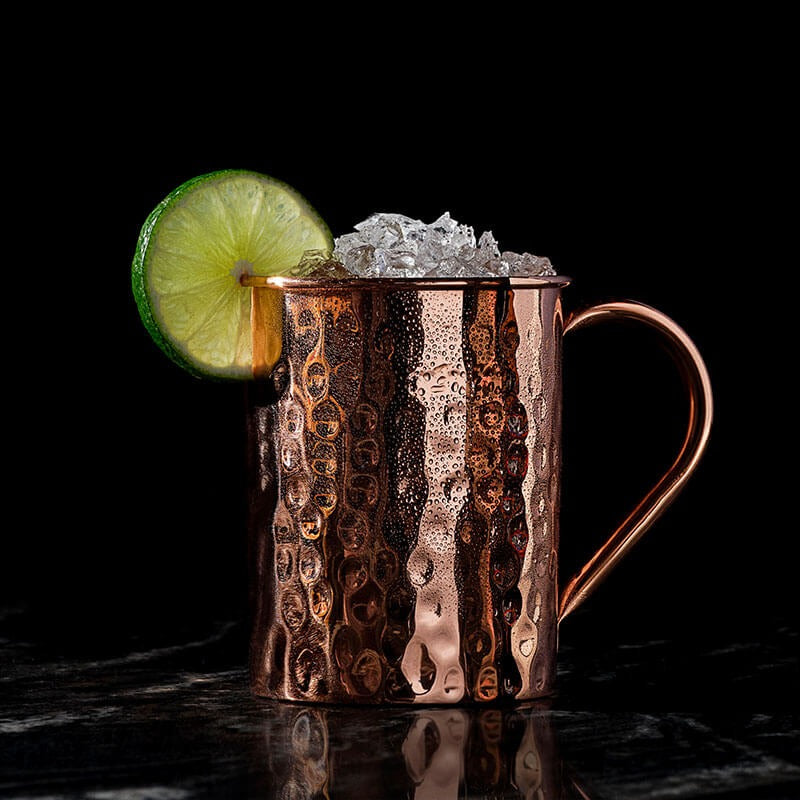
What you're getting.
Craft Standard Mule mixer: non-alcoholic and shelf-stable. You add the spirit before serving.
Add your own vodka.
1/4 barrel: ~245 serves (~$155 list).
High-volume bars, hotels and event programs.
Buy / inquiry
~245 identical serves per keg. Pour cost ~8% at $12/drink.
The Mule, every way you serve it
By the glass, by the batch, or on tap: the same drink, three ways to pour it.
The classic build, one drink at a time. A great Mule, but slow when the bar is three deep.
Pre-mixing buys speed but adds prep, storage and drift. The keg does that work for you, pre-balanced and sealed.
The Craft Standard way: add spirit, connect, garnish, serve.
Your glassware, your garnish, your menu name. The pour underneath stays identical.
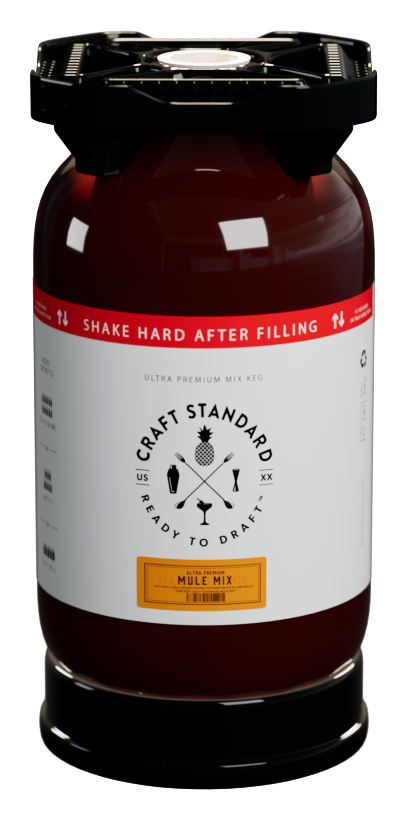
Built for the bar.
Six reasons it earns its handle.
Zero build-out
Nothing to install or retrofit. It slots into the draft system you already run.
Speed of service
Pour a cocktail as fast as a beer. Keep the line moving through the rush.
Consistency on tap
Every drink identical, by anyone, on any shift, in any location.
Scale overnight
One menu, one simple system, rolled across every location you run.
Your spirit, your margin
You choose what goes in and keep the pour-cost math firmly in your favor.
Your spirit brands' best friend
Give your distillery partners a placement that beats the backbar, and a reason to bring marketing support and better terms.
Three steps for consistent pours.
If your team can pour a beer, they can pour Craft Standard.

Spike it
Your keg arrives with natural juice mix, shelf-stable, with room to add spirits. Attach the patented Spiker™ (free with purchase).

Make it yours
Add the spirit you already stock and shake. It only becomes a cocktail once you add the alcohol, so the brand, the proof, and the pour cost are all yours.
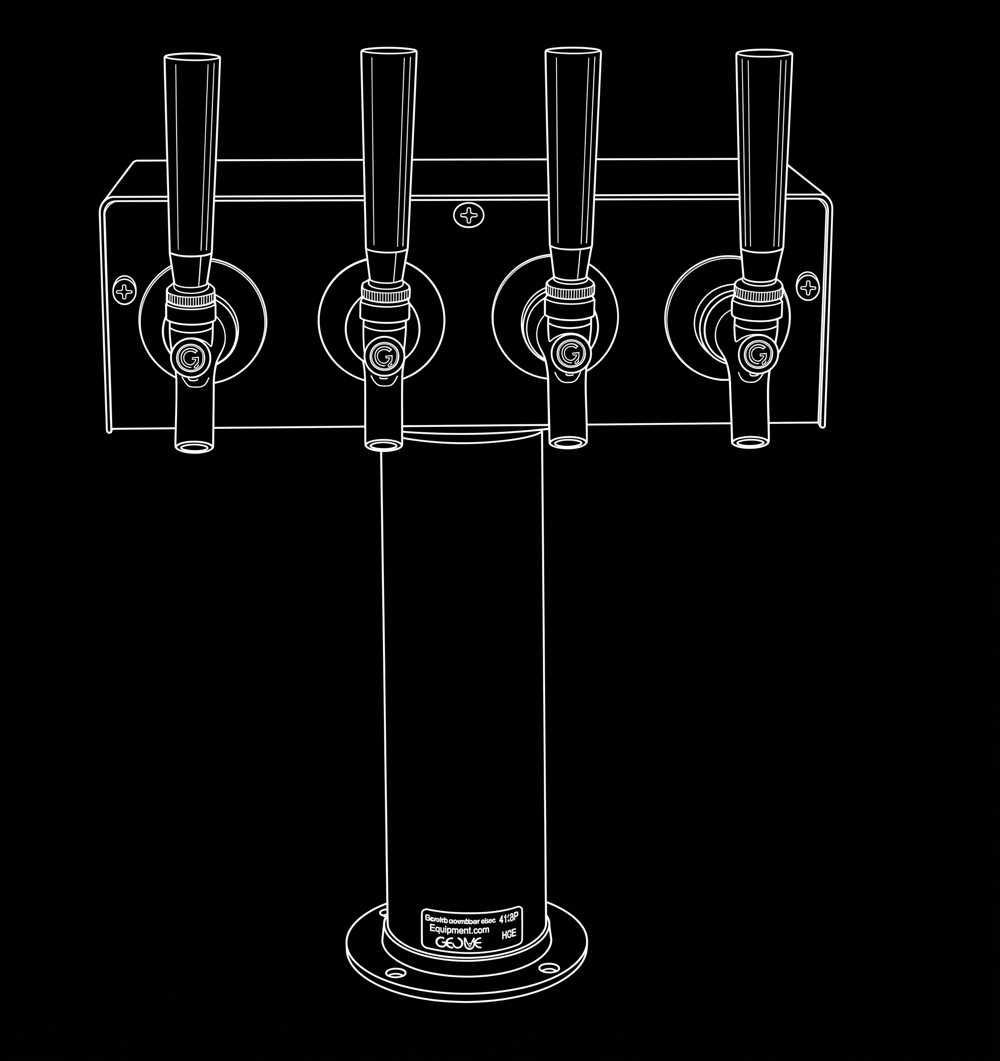
Tap it
Connect to any standard U.S. Sankey D coupler, the same one running your beer. No installation expenses, no complicated maintenance or specialized technician.
Maximize profit per tap.
Every handle on your wall is real estate: it earns a fixed return over the life of a keg, and most of it is badly underpriced. The only question is which keg you put behind it. Same tap, same size, wildly different math.
9 bottles of your spirit go into every keg. Any brand, any price point.
4.0 oz of finished cocktail into an 8 oz cup, over ice: ~245 pours per keg at this size.
Keg and your spirit, everything in, before the first pour.
Based on a 30L Craft Standard keg: $155 keg, plus 9 bottles of the spirit you already buy, ~29L finished cocktail. Drinks per keg scale with your pour size.
Worked example: $155 keg + 9 bottles of your own spirit (~$81) = ~$236 all-in → $2,940 revenue at $12 a drink over ~245 pours of 4 oz. Cocktail pour cost usually runs 18 to 25%; this runs ~8%. Figures gross of a 3 to 5% real-world line loss.
Drink recipes.
162 Mule builds from the recipe library. Pick one, add your spirit, pour on tap.
Blackberry Whiskey Mule
Mule base + Whiskey · Whiskey, Monin Blackberry Syrup
Hibiscus Mule
Mule base + Vodka · Vodka, Monin Hibiscus Syrup
Lavender Haze
Mule base + Vodka · Vodka, Monin Lavender Lemon Syrup
Lychee Mule
Mule base + Vodka · Vodka, Monin Lychee
Blood Orange Mule
Mule base + Vodka · Skyy Blood Orange, Water
Caramel Apple Cider
Mule base · Water, Monin Granny Smith Apple Syrup, Monin Caramel Syrup
Cranberry Mule
Mule base · Water, Cranberry Juice
Mule
Mule base + Vodka · Vodka, Water
Related.
Kegged vs batched
Already batching? How a keg compares on speed, consistency and waste.
See the recipes →Mule questions, answered.
Is the Mule keg alcoholic?
Each keg is the Mule mixer. You add your chosen spirit before serving.
How many Mules does it make?
~245 design serves from a 1/4 barrel, before a 3 to 5% real-world loss.
Does it come in different keg sizes?
1/4 barrel listed on the fact sheet.
How should staff serve it?
Pull, garnish, serve. Add house-style notes so the drink still feels like yours.
Do I need new lines or hardware?
No. It runs on the draft lines you already pour beer through: no new lines, no glycol, no build-out.
How is it cleaned?
Like a beer line. Same process, same schedule, no new SOP, nothing to retrain.
What is in the mix?
Made with natural juices: shelf-stable, pre-balanced and consistent before your spirit ever goes in.
How does it ship?
Non-alcoholic, with no liquor in transit. Your own licensed spirit is what makes it a cocktail.
Are there keg deposits?
No, all kegs are one-use and recyclable. Lightweight and easy to use.
What connector?
Our kegs use the same Sankey-D connector as most beers in the US. No fitting changes, clean the line and start pouring cocktails!
Put Mule on tap.
Tell us where you operate and the volume you pour. We'll map the right Mule setup.